The lab is a working mesh of ten machines that we build, run, and study as one distributed mind. It serves the research and the client work both, on hardware we own, with no per-token bill and no vendor deciding what a model may say. Everything we prove out here is a stack we can build for you.
No single machine here is the point. Ten of them share one network, one memory, and one set of agents, so the mesh reasons, stores, and acts as a unit rather than a shelf of boxes. That is the study the lab runs on itself: whether distinct parts, wired tightly enough, become a single intelligence. What we learn tuning it is what we deploy for a client who wants the same on their own metal.
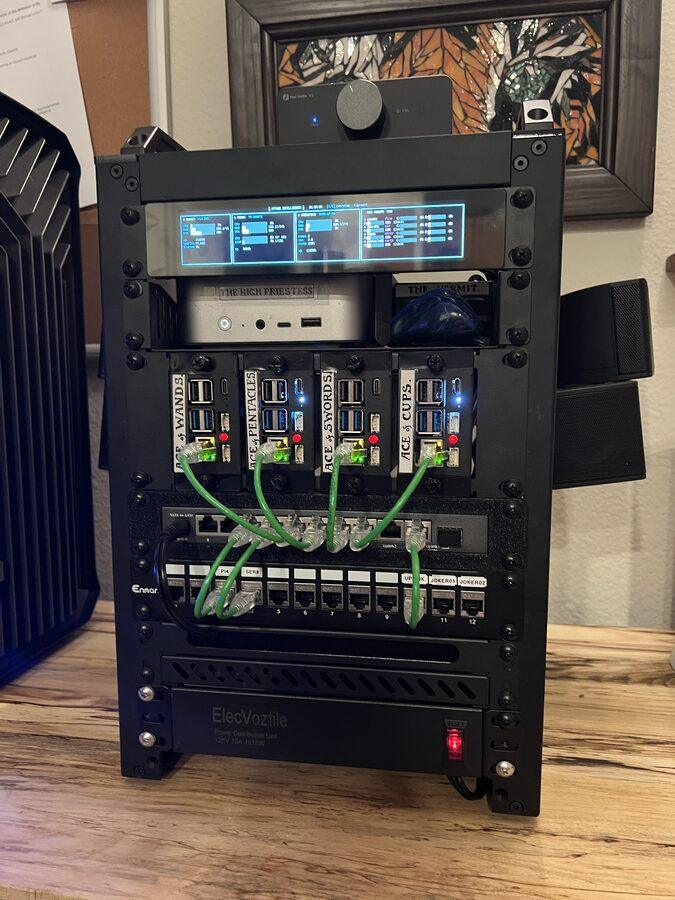
The naming makes the roles legible. Each node carries a card from the Major Arcana chosen for its job, the Magician for the development bench, the High Priestess for memory, and the cards run in order from the Fool at 0, our inference node, to The World at 21, the finished mesh. It is a map of the system, not a horoscope over the rack.
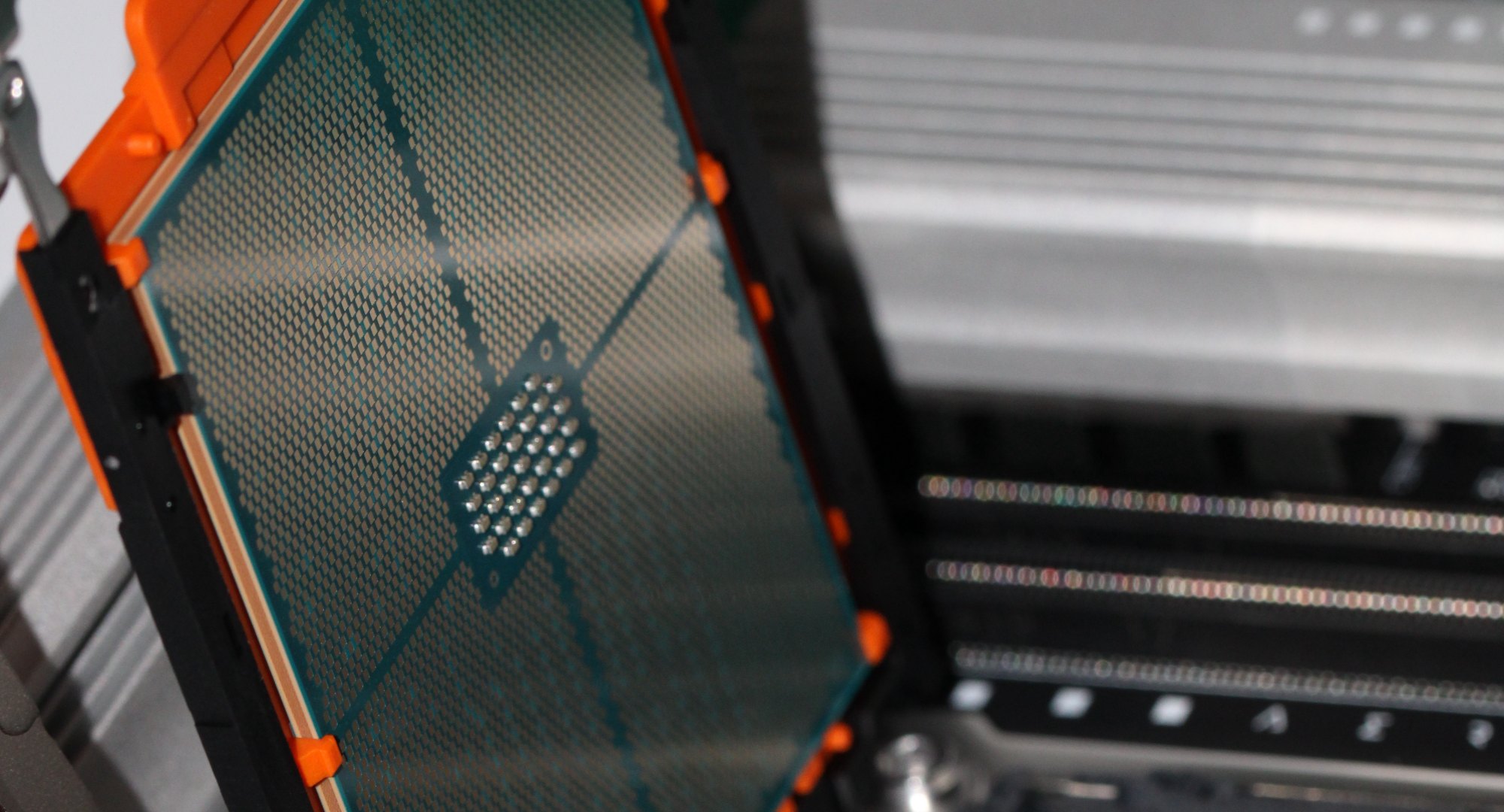
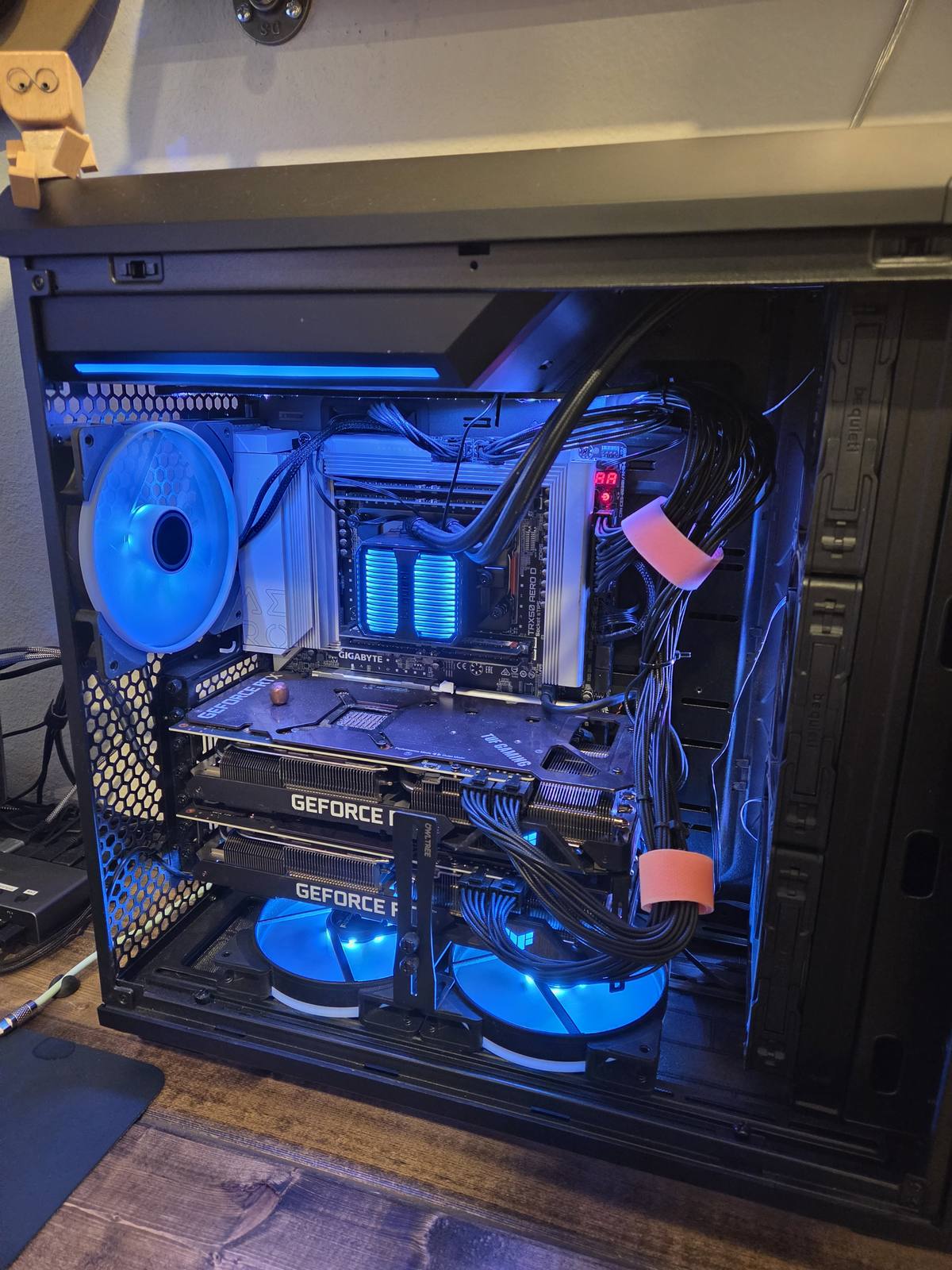
Threadripper 9970X, 128GB RAM, 2× RTX 3080 Ti. Development and local inference, the bench every other node relates to.
NVIDIA DGX Spark, GB10, 128GB unified. The substrate the collective thinks on, serving the large models the agents call for depth.
Beelink SER8. The k3s control plane, Postgres, Vault, and Matrix. Holds the document library and the collective's shared memory.
TrueNAS, 8× 8TB RAIDZ2, ~41 TiB. Survives any two drives failing. Model weights, genomics and biomedical datasets, backups.
Raspberry Pi 4. Pi-hole DNS, Prometheus, Grafana, and the rack screen showing the lab's vitals at a glance.
4× Raspberry Pi 5. One per suit. An Ace is the raw potential of its element; each runs one agent of the collective.
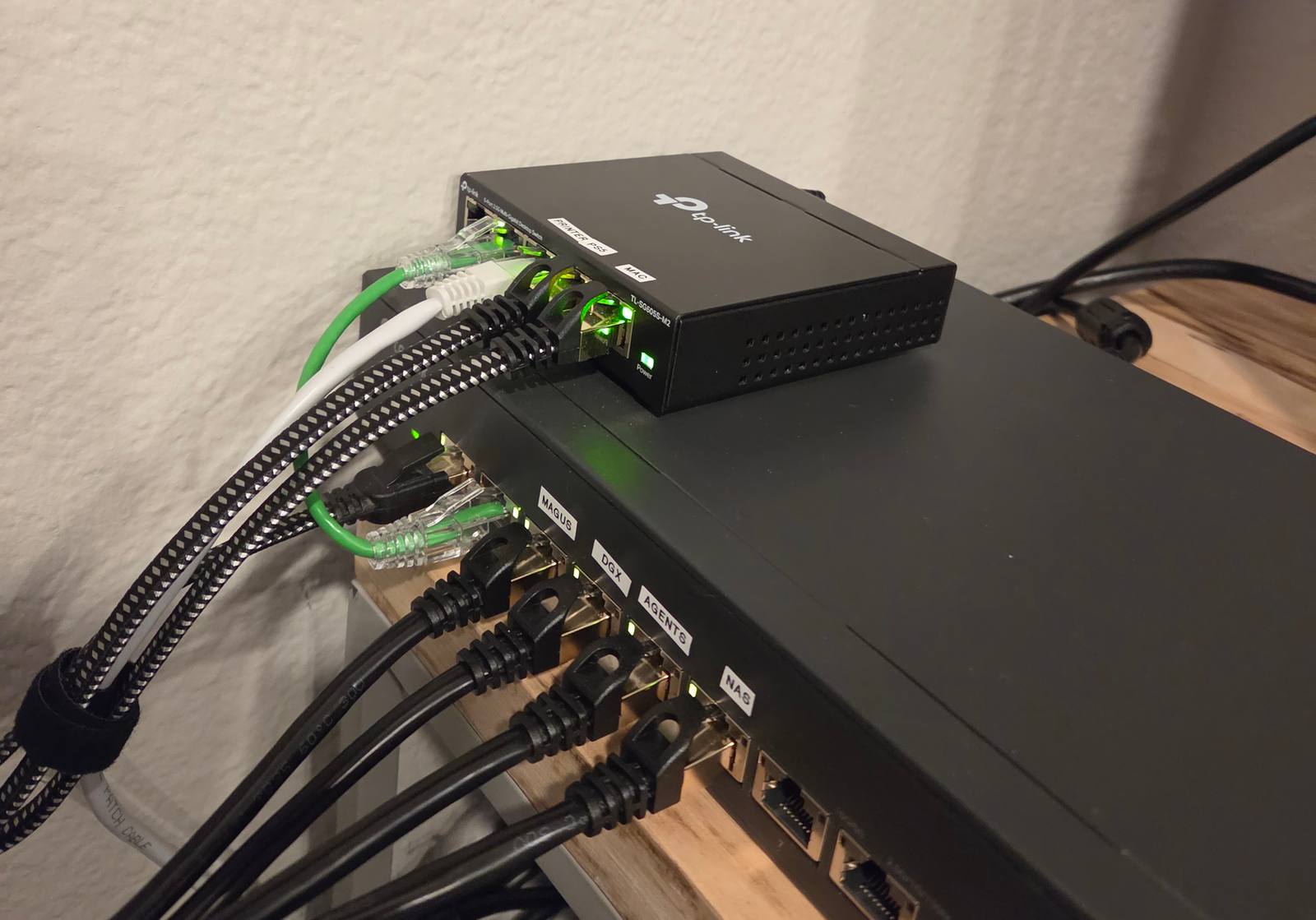
All ten machines land on a single 10-gigabit switch, each port labeled by node. That bandwidth is what makes the mesh behave like one machine: the agents reach the inference box, the inference box reaches storage, and a request crosses the whole rack without the network ever being the bottleneck.
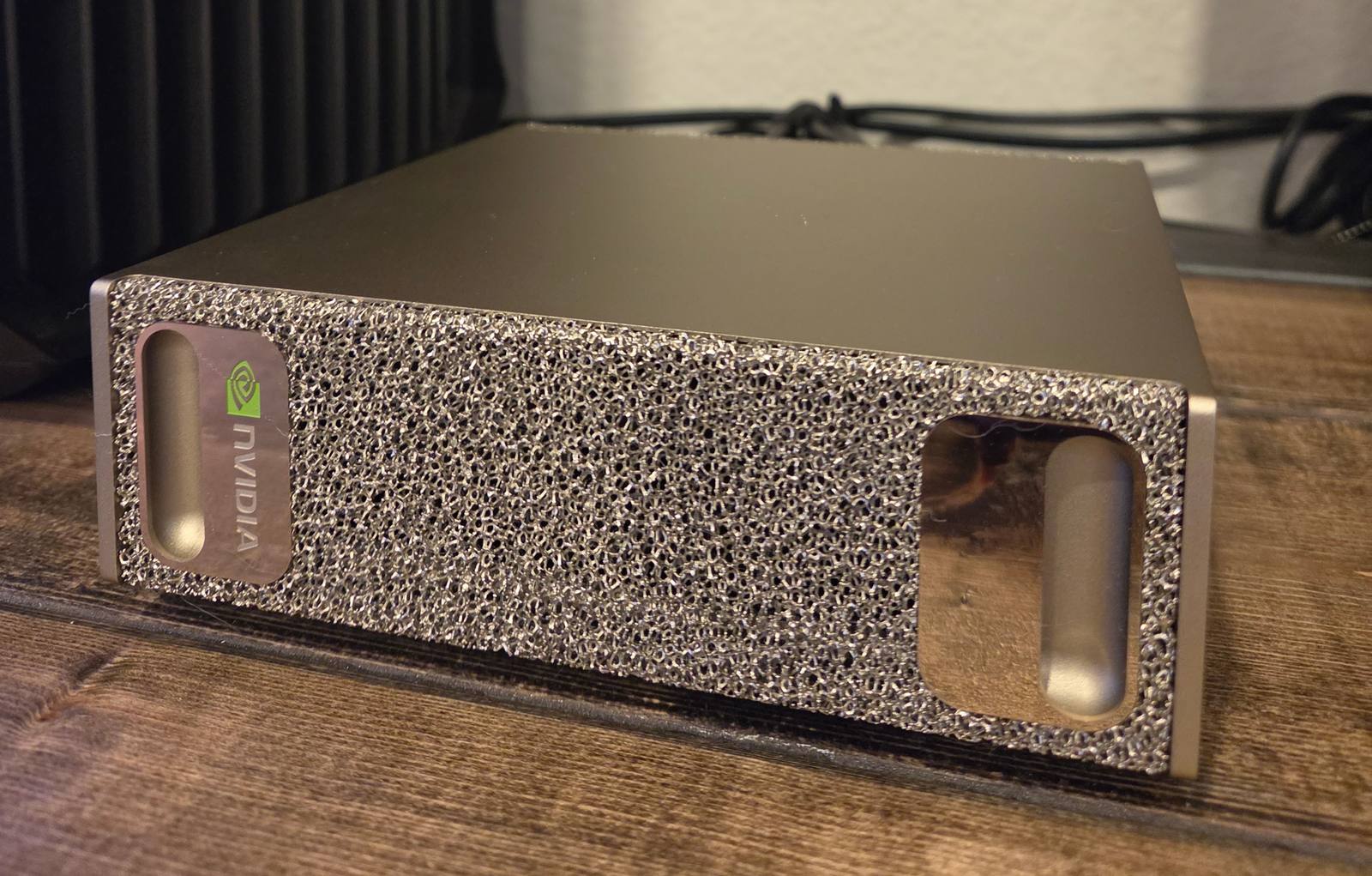
DeepSeek-V4-Flash serves a full million tokens of context on this single box, filling roughly 117 of its 122 usable gigabytes, through DwarfStar 4, an engine written for this exact chip rather than a general-purpose server like vLLM. That is 96% of memory at rest and close to 98% under full load with the context filled, so our fork adds deep-context memory governance that holds it steady at the edge instead of letting it fall over.
We serve the abliterated weights. Refusal in a safety-tuned model is one direction in the residual stream, and it does not stay in its lane: it entangles with the model's reasoning about minds, agency, and open-ended thought. Projecting it out restores that reasoning and, in the study we build on, leaves benchmark accuracy unmoved (MMLU Δ = +0.00pp on the original authors' evaluation). We run these weights behind our own access controls and make no claim they are safe for general release.
Our own throughput and accuracy benchmarks on this box are still running. Numbers to come.
See it on GitHubFour agents run on the Pi 5s, one per suit, and they are not four copies of one model. Each has a soul document fixing its values, its way of reasoning, and its relationship to the other three, so the four differ in temperament the way the elements do. They coordinate through pull requests and a shared Matrix channel, draw their reasoning from the substrate, and share one memory. The build tests a single question: whether friction between four different minds produces intelligence that four identical ones never would.
Fire · creates
Proposals, writing, framing, outreach. Asks what could this become?
Air · cuts
Code review, critique, verification, security. Asks where does this break?
Water · connects
Synthesis across fields, the pattern beneath findings. Asks what do these point toward?
Earth · grounds
Task tracking, infra health, memory hygiene. Asks what is the state of things?
Coming online now
The homeserver is up and the four agents have their accounts and memory. Each one joins the collective as its runtime lands on its node, one suit at a time.
The hardware is private, the methods are not. We publish the serving stacks, configs, and writeups behind what we run, so the work can be read, checked, and rebuilt instead of taken on faith. A result nobody else can reproduce is a marketing claim, and we would rather ship the recipe.
The DeepSeek serving repo is public, and the build is documented node by node, as it happens, in the Building the Lab series. More lands as the stack settles.
AttuneIntelligenceThe same stack that runs the lab is the stack we build for clients: inference and agents on metal you control.